Welcome back, Explorer!
I am Tamar, and today I’m taking you on a journey to explore the wonders of the crown jewel of the peninsula — the world-famous Corcovado National Park. It couldn’t be missing from our blog! My goal here is to give you a clear, friendly overview of this natural wonder.
Where is Corcovado National Park? What makes it unique? How many biological stations does it have? Which areas are open to tourism? How can you visit it?
We will answer all of this and more in the article below.
Corcovado National Park was founded exactly 50 years ago, on October 24, 1975. It protects 42,560 hectares of land and 3,354 hectares of marine territory. Is this important? And why?
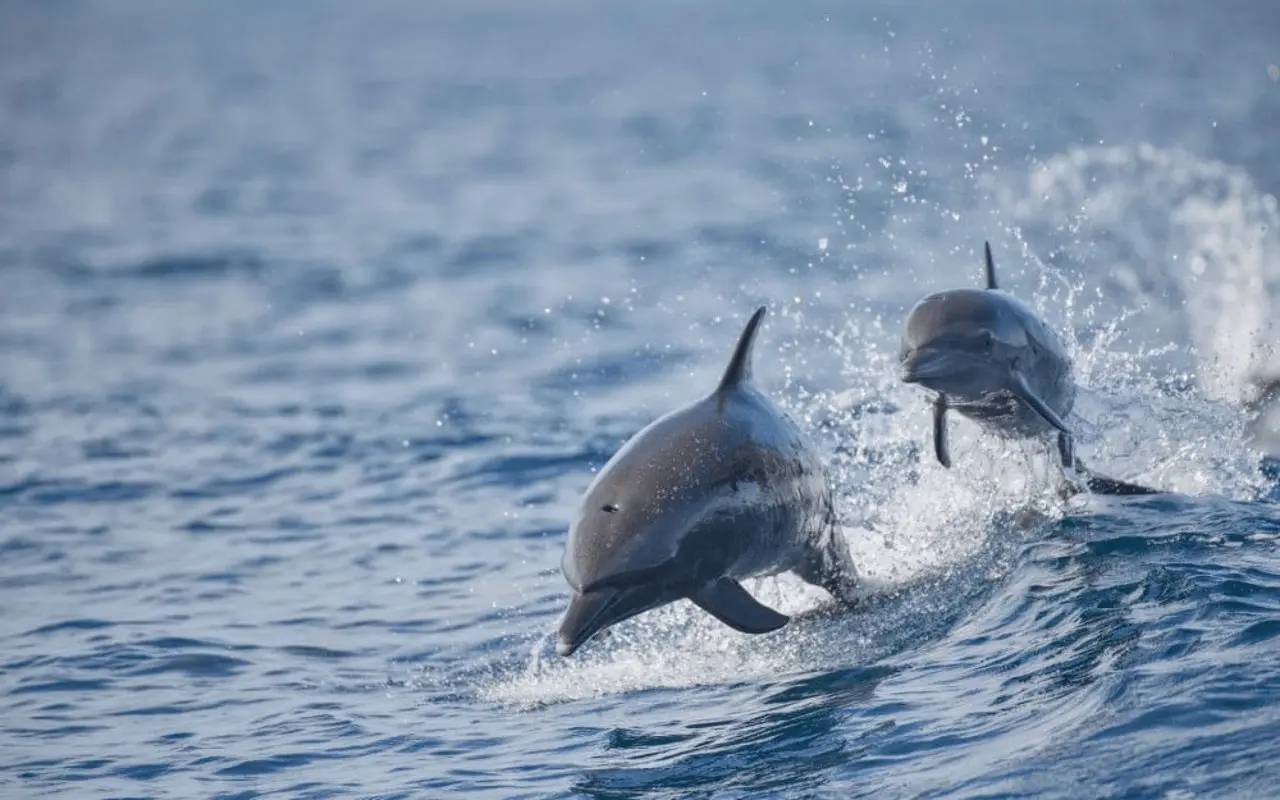
Because Corcovado has an unmatched level of biodiversity — in fact, no other area of similar size on Earth surpasses it. Corcovado contains at least 2.5% of the planet’s biodiversity. This extraordinary characteristic inspired National Geographic to declare Corcovado National Park as “the most biologically intense place on Earth.”
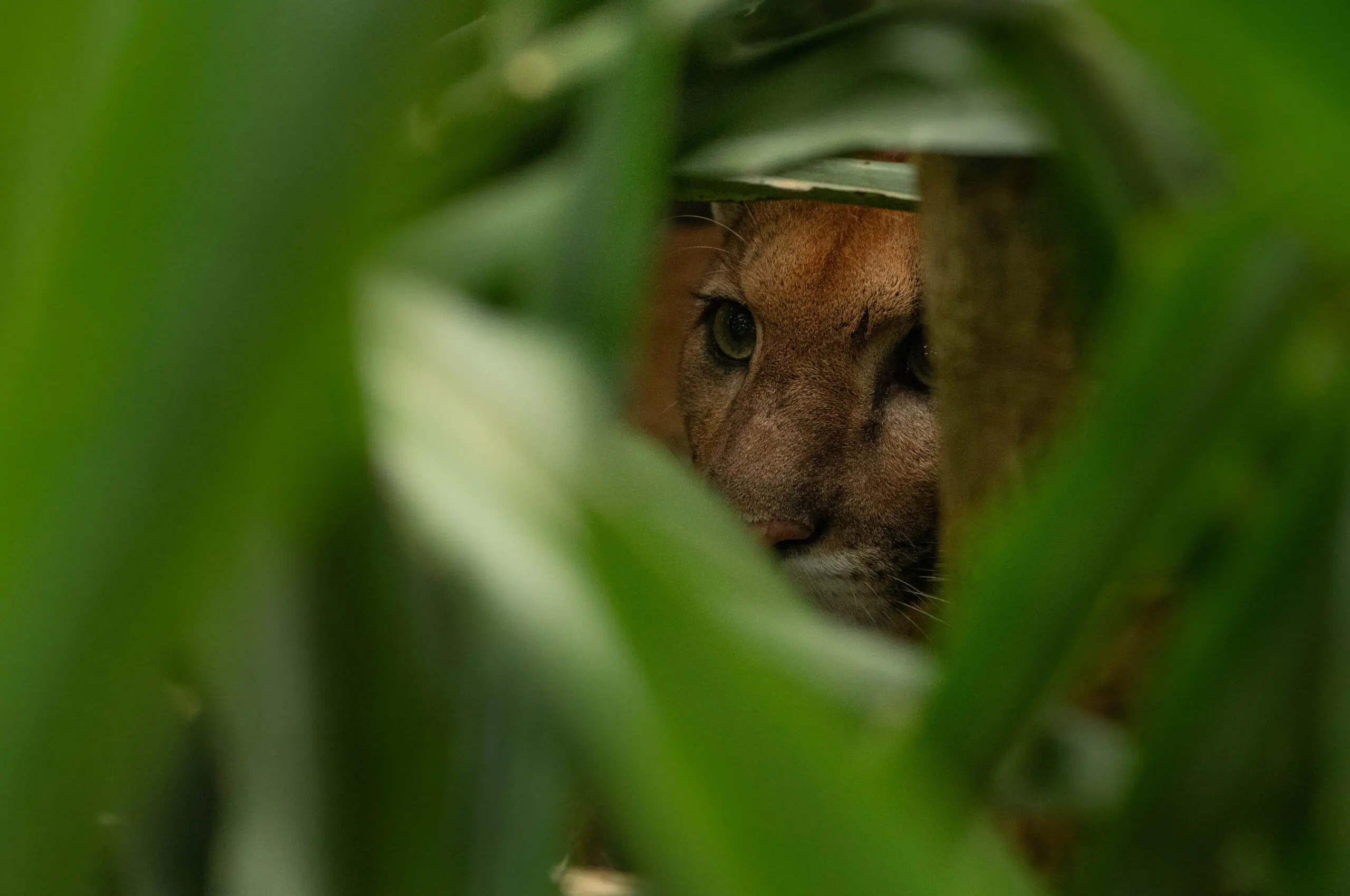
Inside this protected area, you’ll find more than 6,000 species of insects, around 500 species of trees, 367 species of birds, 140 species of mammals, and 117 species of amphibians and reptiles. The list goes on. Corcovado is truly one of a kind — a place everyone should visit at least once in their lifetime.
Corcovado National Park has five sectors you can visit:
- Sirena Ranger Station
- La Leona Ranger Station
- San Pedrillo Ranger Station
- Los Patos Ranger Station
- El Tigre Trail
Let’s talk about access and how to visit Corcovado. We call this section: Everything you need to know before visiting Corcovado National Park.
Corcovado is administered by the Costa Rican government, which means the ticketing process can be bureaucratic and complex. Entrance tickets must be booked in advance, and you must also reserve meals and a certified guide before purchasing your entrance.
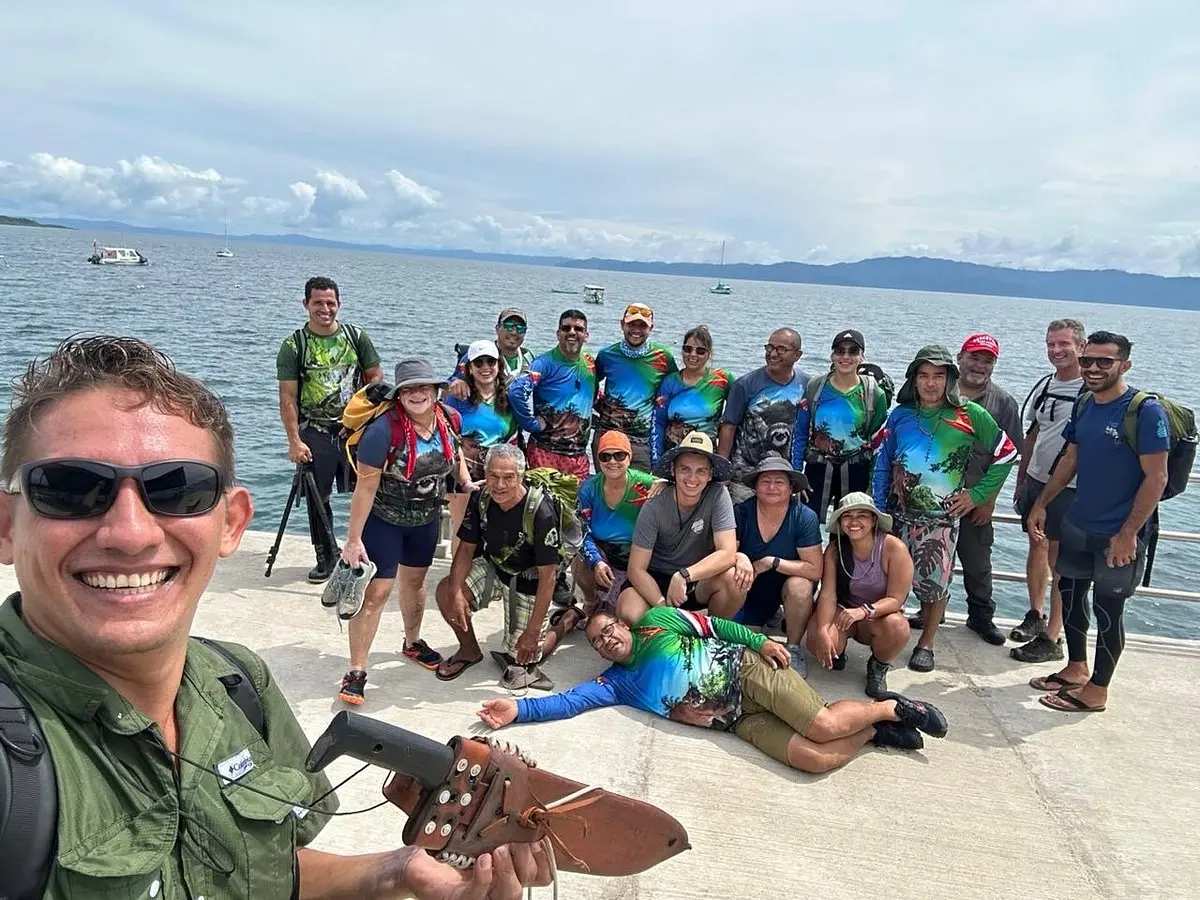
But don’t worry — that’s why we’re here. If you decide to visit Corcovado with Corcovado Explorers, we handle everything for you. All you have to do is choose the tour that best fits your needs and physical condition.
La Leona Ranger Station
La Leona is the main land entrance to the park. It is located in Carate, near Puerto Jiménez. Access is only by land — by car, taxi, or public transport. Once in Carate, you must walk 3.5 km to reach La Leona, the official gateway to Corcovado.
The La Leona trail is linear and features iconic sites such as Madrigal, Cementerio, Paraíso, and El Barco. It stretches 16 km and ends at Sirena Biological Station. The route showcases beach scenery and lush forest, and during turtle nesting season, you might even see baby turtles emerging from the sand.
This trail can be done as a 1-day tour or as part of a multi-day expedition through the park. The station has toilets, showers, an information point, and a drinking water refill area.
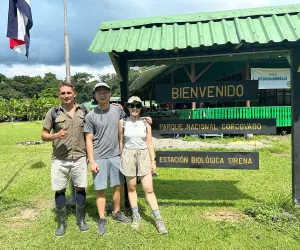
Sirena Ranger Station
This is what we Costa Ricans call “La Tapa del Perol.” The best of the best. The place everyone dreams of visiting. And no — I’m not exaggerating. I’ve seen people cry when they couldn’t get permits for Sirena because spaces are so limited.
Sirena is the living heart of the park — the deepest accessible primary rainforest. Many say arriving at Sirena feels like walking into Jurassic Park, and trust me, they’re right.
You can reach Sirena by:
- Walking from La Leona (19.5 km)
- Walking from Los Patos (23 km)
- Boat from Puerto Jiménez, Drake Bay, or Sierpe
It is the only station with lodging and amenities: bunk beds, showers, toilets, souvenir shop, and buffet-style meals.
Sirena has 8 trails totaling 20 km, perfect for observing wildlife like:
- All four monkey species of Costa Rica
- Baird’s tapir
- Puma, ocelot, and even jaguar
- American crocodile and spectacled caiman
To truly explore Sirena, I recommend a 3-day tour, although half-day and multi-day options exist.
Los Patos Ranger Station
Los Patos is the second main entrance to the park and is often considered the most challenging adventure.
The trail is 23 km of dense forest, river crossings (20 times!), and rugged terrain. It passes through both primary and regenerating secondary forest. Wildlife may include birds, snakes, peccaries, coatis, insects, and spectacular vegetation.
Access:
- Dry season (Dec–Apr): reachable by car
- Rainy season (May–Nov): only accessible by tractor or horse
Many local operators do not offer Los Patos tours during the rainy season due to safety concerns. If you’re considering this route, contact us so we can guide you properly.
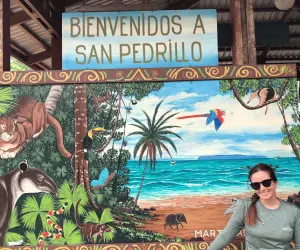
San Pedrillo Ranger Station
San Pedrillo can be visited by land or sea, but it is closest to Bahía Drake, making it ideal to visit from there or from Sierpe.
If hiking, the trail from Drake is 10 km and must be done at low tide. The scenery is mostly beach and considered medium-high difficulty.
Most visitors choose the boat-in / boat-out option, which takes 30–45 minutes each way.
San Pedrillo has a network of 12.74 km of trails, including:
- Pavón
- La Catarata (Waterfall)
- Río Pargo Arriba
- Río Pargo Abajo
- Llorona
Wildlife includes coatis, sloths, anteaters, many birds, and aquatic species along the rivers. Amenities include a camping area, drinking water, showers, and toilets.
El Tigre Trail
This trail is special to me. Alberto and I had the honor of hiking it the day it was inaugurated — guided by none other than Tomas Ridings, now one of Corcovado Explorers’ star guides.
El Tigre is a high-difficulty trail, climbing from 73 to 469 meters above sea level over 7.2 km. It is perfect for hikers who love elevation, challenge, and spectacular forest scenery.
Historically, this route was used by gold miners and hunters who extracted resources from Corcovado. Over time, education and community involvement transformed these individuals into certified guides, and the trail became a source of sustainable income. Today, El Tigre is the only station managed by a community association.
The trail features:
- Exceptional birdwatching
- Giant ficus trees
- Stunning viewpoints over Golfo Dulce
- Evidence of indigenous pottery
The trail does not connect to Sirena. It takes 6–8 hours and begins and ends in different (but nearby) locations.
Final Thoughts
Corcovado National Park is a priceless gem of world biodiversity — a place where nature displays its maximum splendor. Each biological station offers a different window into this vibrant ecosystem, from La Leona’s beaches to Sirena’s dense jungle, the adventure of Los Patos, the waterfalls of San Pedrillo, and the community spirit of El Tigre.
Exploring Corcovado means immersing yourself in a world where wildlife thrives and landscapes leave you breathless. Because it is remote and requires thoughtful planning, working with experts like Corcovado Explorers ensures a safe, seamless, and enriching experience.
Whether you crave a challenging hike, wildlife encounters, or simply the chance to witness the majesty of the rainforest — Corcovado is waiting for you.